Pizza is pizza until you've eaten both a proper Neapolitan and a real New York slice. Then the differences become obvious. The crust texture, thickness, chew, flavor; they come from genuinely different dough formulas and baking methods. Here's a full breakdown of what makes each style distinct, and how to make either one at home.
The Core Differences
These two styles diverge at almost every step of the process:
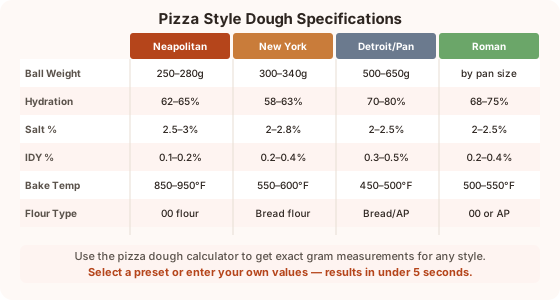
| Variable | Neapolitan | New York |
|---|---|---|
| Hydration | 62–65% | 58–63% |
| Flour type | 00 (12–13% protein) | Bread flour (13–14%) |
| Ball weight | 250–280g | 300–340g |
| Pizza size | 10–12 inches | 14–18 inches |
| Baking temp | 850–950°F | 550–600°F |
| Bake time | 60–90 seconds | 8–12 minutes |
| Oil in dough | None (AVPN spec) | Sometimes (1–2 tbsp) |
| Sugar in dough | None | Sometimes (helps browning) |
Let's go through each of these and why they matter.
Hydration: Why Neapolitan Is Higher
At first glance, 63% (Neapolitan) vs 60% (New York) doesn't seem like much. In practice, those 3 percentage points make the dough noticeably different to handle.
Neapolitan dough at 63–65% is softer, more extensible, and stretches more readily by hand. This matters because Neapolitan shaping relies on gravity and a light touch; you drape the dough over your knuckles and let it stretch by its own weight. A stiffer dough at 60% would resist this.
New York dough at 58–62% is firmer, which helps it hold its shape when stretched wide to 16–18 inches. It's easier to hand-toss because the dough has more structural integrity. The firmer texture also helps the finished pizza hold up under the weight of cheese and toppings, which is necessary for a slice that needs to be foldable.
To get exact water amounts for either style, use our pizza dough calculator. The Neapolitan and New York presets load the correct hydration automatically.
Flour: 00 vs Bread Flour
This is where the real difference is. Italian 00 flour (Tipo 00) is milled to an extremely fine texture; it's finer than anything labeled "all-purpose" in the US. Caputo Pizzeria, the flour used by most Neapolitan pizzerias in Naples, has 12–13% protein. This protein level creates a dough that's supple and extensible but not quite as chewy as high-protein American bread flours.
American bread flour at 13–14% protein (King Arthur Bread Flour, for example) builds stronger, more elastic gluten. This gives New York dough that characteristic chew; you bite through the crust and feel resistance, then a satisfying chew. It's also more forgiving of the longer bake time at 550–600°F.
Can you substitute? Yes, with caveats. You can make Neapolitan-style dough with bread flour; it will taste fine but will be slightly chewier. You can make New York dough with 00 flour; it will be a bit more tender and may not hold up as well on a large, heavily topped pizza. For the most accurate result, use the flour the style calls for.
Baking Temperature: The Biggest Practical Difference
This is the biggest barrier for home bakers attempting Neapolitan pizza. Authentic Neapolitan pizza bakes in a wood-fired oven at 850–950°F for 60–90 seconds. Most home ovens top out at 500–550°F.
At 500°F, a Neapolitan-style dough bakes in about 5–7 minutes. You won't get the same leopard spotting (the dark brown and black blistered patches on the cornicione) or the same airy, charred edge. But the flavor is still excellent if you've cold-fermented the dough for 48–72 hours.
Several home oven strategies help:
- Pizza steel (¼-inch thick): Preheat for 1 hour at maximum temperature. The steel's thermal mass mimics a stone floor.
- Broiler finish: Bake on the steel for 4 minutes, then switch to broil for 1–2 minutes to blister the top.
- Portable gas pizza ovens (Ooni, Gozney): Reach 900°F+ and produce genuine Neapolitan results at home.
New York pizza at 550–600°F is well within home oven range. Preheat a pizza stone or steel, slide the pizza on, and bake for 8–12 minutes until the crust is golden brown and the cheese is bubbly with light browning.
Oil and Sugar: Neapolitan Purists vs New York Flexibility
The AVPN (Associazione Verace Pizza Napoletana) specification for authentic Neapolitan pizza dough includes only flour, water, salt, and yeast. No oil, no sugar, no other additions.
New York pizza doesn't have a strict governing body equivalent to the AVPN. Most NY-style recipes include:
- 1–2 tablespoons of olive oil per 500g of flour: adds extensibility, gives the crust a slightly richer flavor, and improves browning
- Sometimes 1–2 teaspoons of sugar: accelerates browning in a cooler oven (Maillard reaction)
If you're making New York dough and want the oil added, you'll need to account for it in your total dough weight calculation. Our dough ratio calculator handles flour, water, salt, and yeast; if you add oil, factor it into the total dough weight.
Fermentation: Both Benefit from Cold
Both Neapolitan and New York dough benefit from cold fermentation, though the timelines can differ slightly.
Neapolitan: 24–48 hours at 38°F is standard. The AVPN allows up to 48 hours. Use 0.1–0.2% IDY.
New York: 24–72 hours at 38°F. New York pizzerias often cold-ferment in large batches for 2–3 days. The extra fermentation gives the dough more flavor depth and helps it stretch easily to large sizes. Use 0.15–0.25% IDY.
Same-day dough is fine for both styles if you're in a hurry; use 0.3–0.5% IDY and a 4–6 hour room-temperature ferment. It won't taste quite as complex, but it's still good pizza.
For a detailed breakdown of the cold fermentation process and timing, see our cold fermentation guide. And if you want to understand the baker's percentage math behind these formulas, read baker's percentages explained.
Which Should You Make?
Make Neapolitan if: You have a pizza oven or are willing to invest in a pizza steel and broiler technique. You want the lightest, most delicate crust. You're committed to the process; high-quality ingredients, cold fermentation, proper shaping.
Make New York if: You have a home oven and want an accessible, reliably delicious result. You want a pizza you can top generously without the crust getting soggy. You're making pizzas for a crowd and need a forgiving, scalable formula.
Both styles use the same baker's percentage math. Calculate your exact ingredients for either style; just select the Neapolitan or New York preset to load the right parameters.