You made a big batch of dough. Now what? Whether you planned for leftovers or just want to batch cook for the week, storing pizza dough properly keeps it usable and protects the flavor you worked to develop during fermentation.
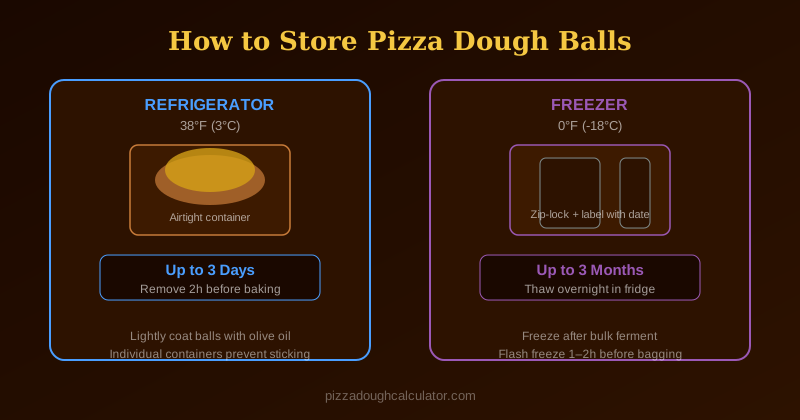
Refrigerating Pizza Dough Balls (Up to 3 Days)
The refrigerator is your first storage option for dough that will be used within a few days.
How to store:
- After dividing your bulk dough into individual portions, shape each portion into a tight ball. Surface tension is important; a loose, slack ball will spread and flatten in storage.
- Lightly coat each ball with olive oil to prevent the surface from drying out and forming a tough skin.
- Place each ball in its own airtight container. Individual containers prevent the balls from sticking together and make it easy to remove just one at a time. Deli containers (16oz or 32oz round) work well.
- Seal tightly and refrigerate at 38°F.
How long it lasts: Up to 3 days. After 72 hours, the dough continues to ferment and may become over-proofed; the gluten structure weakens and the dough gets sticky, sour, and difficult to shape.
Before using: Remove from the fridge 2 hours before baking. The dough must temper at room temperature before it's shapeable. Cold dough is stiff and will tear. After 2 hours, press the center, and it should spring back slowly, indicating the gluten has relaxed.
If you made your dough specifically for cold fermentation (0.1–0.15% IDY), the 1–3 day refrigerated period IS the planned fermentation, not just storage. See our cold fermentation guide for the full process.
Freezing Pizza Dough Balls (Up to 3 Months)
Freezing is excellent for meal planning; you can make a large batch on the weekend and have ready-to-use dough balls for weeknight pizzas.
When to freeze: Freeze dough balls AFTER the initial bulk fermentation (the first 1–2 hour room-temperature rise) but BEFORE they proof in the refrigerator. This is the optimal timing.
How to freeze:
- After shaping balls, place them on a parchment-lined baking sheet, making sure they don't touch.
- Freeze uncovered for 1–2 hours until firm (this prevents them from sticking to the bag).
- Transfer to individual zip-lock bags or wrap each ball tightly in plastic wrap, then place all wrapped balls in a larger freezer bag.
- Label with the date and dough formula (hydration %, ball weight, yeast type).
- Store in the freezer at 0°F for up to 3 months.
How long it lasts: 3 months produces good results. Beyond that, the dough still works but may have slightly reduced oven spring and a less complex flavor from extended freezer storage.
Thawing Frozen Pizza Dough
Proper thawing is critical. Rushing it damages the dough's structure.
Recommended method (overnight in the fridge):
- Remove from the freezer the night before (12–16 hours in advance).
- Transfer the still-frozen ball to an oiled container and refrigerate.
- By morning, the ball is thawed and has been cold-fermenting gently overnight.
- Remove from the fridge 2 hours before baking and let it temper at room temperature.
This method effectively gives the dough a mini cold ferment during thawing, which actually improves flavor compared to dough that was never frozen.
Faster method (counter thawing: 4–5 hours):
- Remove from the freezer and transfer to an oiled container.
- Let it thaw at room temperature (68–72°F) for 4–5 hours.
- As soon as the dough is fully thawed and soft, bake it; don't let it over-proof at room temperature.
Counter thawing works, but requires attention. Dough that's been frozen and then left at room temperature too long will over-proof quickly, especially in a warm kitchen.
Microwave thawing: Avoid. The microwave applies heat unevenly and starts cooking the exterior before the interior is thawed.
Signs That Stored Dough Has Gone Bad
Over-proofed (refrigerator storage): The ball has doubled or tripled in size in the container, the dough smells strongly acidic/sour, and when you try to shape it, it's very slack, sticky, and tears easily. It may still produce pizza; it just won't have the structure of properly proofed dough. The crust will be flatter with a strong fermented flavor.
Freezer burn: The surface of the dough ball shows dry, grayish patches. The ice crystals that form on the surface can damage the gluten structure. Minor freezer burn isn't a disaster; just cut away the affected areas. Prevent it with proper wrapping.
Off smell: Fresh dough smells mildly yeasty and slightly tangy. If stored dough smells strongly like ammonia, nail polish remover, or alcohol beyond normal fermentation, discard it.
Storing Par-Baked Pizza
Another option: bake the pizza 70% of the way, then freeze or refrigerate it. Reheat from frozen in a hot oven for 4–5 minutes. This is how many commercial frozen pizzas work, and it's a useful option if you've already shaped and topped your pizza but can't bake it.
This approach works better with New York or pan styles than with Neapolitan; the wet, fresh ingredients on Neapolitan pizza don't freeze as well.
Planning Your Batch with the Calculator
One of the practical uses of baker's percentage math: once you know your base formula, scaling up for a larger batch takes seconds. Use the pizza dough calculator to scale your batch to exactly the number of balls you want to make, store, and freeze. Enter ball count, ball weight, and your hydration/yeast parameters, and you get precise ingredient amounts instantly.
For common issues you might encounter with stored dough, see our pizza dough troubleshooting guide. And for a complete understanding of how cold fermentation and refrigerated storage interact, read our cold fermentation guide.
Our about page explains the methodology and sources behind all the guidance on this site.